Últimas noticias

Building Research Establishment Environmental Assessment Method (BREEAM In-Use Version 6) Waste Credits Guide

Building Research Establishment Environmental Assessment Method (BREEAM In-Use Version 6) Waste Credits Guide

Up to 6 management performance credits are available within BREEAM for waste management, depending how the data is collected and communicated, with a requirement to target-set and document either tonnage or cubic feet of diverted waste.

To calculate the additional tonnage of diverted waste by using K&N reusable filters, before installing K&N filters, weigh a representative sample of legacy disposable filters from each air handling unit (AHU) operated in the building, when they have reached the end of their service life, as they are removed before they are sent to landfill. Multiply the weights of individual used filters by the number of filters installed in each AHU to derive the total weight of filters being sent to landfill for the building. This is the additional diversion weight for your table below.

Alternatively calculate the additional volume of diverted waste by using K&N reusable filters, before installing K&N filters, measure a representative sample of legacy disposable filters from each air handling unit (AHU) operated in the building, when they have reached the end of their service life, as they are removed before they are sent to landfill. Be sure to measure the filters in the state they are disposed of in case they are usually crushed before disposal. Multiply the volumes of individual used filters by the number of filters installed in each AHU to derive the total volume of filters being sent to landfill for the building. This is the additional diversion volume for your table below.

Use the highlighted row below.

Landfilltons/ft3
Incinerationtons/ft3
Diverted – waste to energytons/ft3
Diverted – recycling – not closed-loop/unknowntons/ft3
Diverted – recycling – closed-looptons/ft3
Diverted – reuse – not at the assettons/ft3
Diverted – reuse – at the asset (or stored for reuse on the asset)tons/ft3
Diverted – recycled – at the assettons/ft3
Diverted – other tons/ft3

To learn more about BREEAM for waste management credits, click here.
Green Globes for Existing Buildings Points Guide

Green Globes for Existing Buildings Points Guide

The Materials section 5.2 of GreenGlobes, Recycling and Waste, earns a maximum of 55 points out of a program total of 1,000 points when calculating a green building initiative. Green Globes certification requires a minimum overall score of 35% of the total applicable points, and certified projects are assigned a rating of One to Four Green Globes. A waste diversion policy itself earns six points and must include types of consumables/disposables waste being diverted from landfill, contractor requirements, and waste reduction targets. Waste measurements should be expressed both in absolute terms (e.g. the total amounts of trash and recycling) and percentage rate reduction over a specific timeframe.

Waste diversion target credits are awarded as follows:

Diversion Target PercentagePoints
85% – 100% 5
75% – 84%4
50% – 74% 3
25% – 49% 2
Less than 25% or unknown0

Depending on other waste streams for the building, the use of reusable filters will raise the diversion rates to earn additional points.

To calculate the additional weight of diverted waste by using K&N reusable filters:

  • Before installing K&N filters, weigh a representative sample of legacy disposable filters from each air handling unit (AHU) operated in the building, when they have reached the end of their service life, as they are removed before they are sent to landfill.
  • Multiply the weights of individual used filters by the number of filters installed in each AHU to derive the total weight of filters being sent to landfill for the building.
  • This can be applied to the baseline year to show the percentage rate reduction for the following year and will go towards your waste diversion performance for your Green Globes Assessor to review.

To learn more about the Green Globes for Existing Buildings program, visit thegbi.org/greenglobes.

UL Standard 2799 Waste Diversion Guide

UL Standard 2799 Waste Diversion Guide

The formula used to calculate the zero waste to landfill diversion rate is as follows:

When installing K&N reusable filters, the weight of diverted filter waste counts towards the mreduced, Mass reduced (onsite) weight in the above table.

To calculate the additional mass of diverted waste by using K&N reusable filters for this table, before installing K&N filters, weigh a representative sample of legacy disposable filters from each air handling unit (AHU) operated in the building, when they have reached the end of their service life, as they are removed before they are sent to landfill. Multiply the weights of individual used filters by the number of filters installed in each AHU to derive the total mass of filters being sent to landfill for the building. This is the additional diversion mass, mreduced, to contribute to your table.

Pro Tip

The UL Standard requires each facility of an organization to prove at least 90% diversion through methods other than waste to energy for that facility to achieve Zero Waste to Landfill (ZWTL) designations (Silver, Gold, Platinum). The highest designation, platinum, is validated by UL Solutions when a facility can prove that it consistently achieves a landfill waste diversion rate of 100%. This may not be achievable if your building uses disposable HVAC filters. Your building may now be able to meet this requirement by switching to K&N reusable filters, especially if you show intent to reuse them with, say a washing procedure or cleaning contract.

To learn more about UL Solutions Waste Diversion Credits, click here.

How a Global Bank Cut $803K in HVAC Costs & Reduced Waste

How a Global Bank Cut $803K in HVAC Costs & Reduced Waste

SUSTAINABILITY LEADERSHIP IN LONDON’S FINANCIAL DISTRICT WITH K&N ENGINEERING REUSABLE HVAC FILTERS

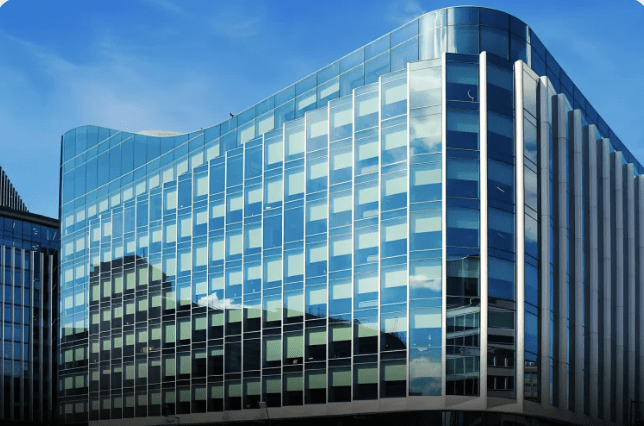
In 2023, a global financial services firm in London’s Financial District replaced its disposable filters with K&N washable, reusable filters across its 10-story headquarters. The facility team, already committed to sustainability with initiatives like a rooftop garden using recycled water, aimed to further that commitment as they participated in a pilot of K&N’s potentially transformative product: high-flowing, washable re-usable HVAC filters.

*Does not include energy performance or waste disposal and removal cost calculation.

By adopting K&N filters, the firm significantly reduced landfill waste, improved energy efficiency, and achieved an ROI in under two years. K&N’s solution not only supported the building’s sustainability goals but also offered long-term cost savings and a measurable environmental impact. The facilities team has now had the filters installed for the full ROI payback period and is continuing to enjoy the benefits of reduced impact to the waste stream, improved energy efficiency and financial savings.

Project

Financial Services Firm EMEA HQ K&N Replaced Legacy Disposables

Location

London, United Kingdom

Use case

City Center High Rise 10-story building with 826,000 net ft² of office space

Equipment

Cooling Towers - 448 units of 12"x12"x2" and 448 of 24"x24"x2" standard MERV 8 panels

The keys to success

The client was able to demonstrate significant improvement in differential pressure while also demonstrating a slowing of the build-up of dP over the legacy disposable filters. Managers were able to extend the changeout cycle from roughly 5 months to washing every 9 months.

Overall the operation is more sustainable, requiring fewer deliveries and fewer waste hauls as a result of the change.

TRANSFORM YOUR FACILITY

FILTERs FOR YOUR PILOT

Air filtration without hesitation. To demonstrate our confidence, K&N Global Filtration will supply filters to jump start a pilot program in your facility. Inquire below and connect with our Product Specialist for more details on the pilot program and how to get started.

K&N Global Filtration Joins Infrastructure Masons to Advance Sustainable Digital Infrastructure

K&N Global Filtration Joins Infrastructure Masons to Advance Sustainable Digital Infrastructure

Industrial group will contribute expertise in energy-efficient air filtration and air management solutions to several iMasons’ committees

Riverside, CA – May 9, 2023 —  In a move that reinforces its commitment to building sustainable digital infrastructure, K&N Global Filtration has joined forces with Infrastructure Masons (iMasons), the global non-profit association of digital infrastructure professionals. As a leading manufacturer of high-performance, sustainable air filtration solutions for providers of mission-critical infrastructure, K&N Global Filtration is uniquely positioned to contribute to iMasons’ efforts to promote energy efficiency, renewable energy, and the path toward net zero in the data center industry.

K&N Global Filtration has long been committed to sustainability, born out of an unwavering commitment to zero waste and exceptional performance more than fifty years ago. K&N Global Filtration’s first-of-its-kind, high-performance, reusable industrial air filters not only provide outstanding performance with high airflow and low restriction, but they also help data centers and other mission-critical facilities achieve their sustainability goals by reducing energy consumption through filtration efficiency.

“As the world increasingly relies on digital infrastructure, it’s essential that we prioritize sustainability in our industry,” said Jonathan Fiello, Chief Engineering Officer of K&N Global Filtration. “Joining iMasons allows us to collaborate with like-minded professionals to develop sustainable solutions that benefit both our customers and the planet.”

In addition to joining iMasons, K&N Engineering has also pledged membership to the iMasons Climate Accord, a global initiative to reduce carbon emissions from the digital infrastructure industry. As a member of the Climate Accord, K&N Global Filtration will join other industry leaders in committing to a set of ambitious goals, including reaching net-zero carbon emissions by 2030. K&N Engineering also plans to take part in several iMasons’ committees including Sustainability, Innovation, Inclusion and Technology, as well as participate in local chapter groups.

“I’m proud to welcome K&N Engineering to the iMasons community,” said Dean Nelson, Founder and Chairman of Infrastructure Masons. “Applying their half a century of automotive industry expertise to digital infrastructure will help boost the iMasons Climate Accord efforts.”

K&N Engineering has implemented a variety of sustainability initiatives, including shipping its air filters in corrugate-free, reusable, returnable crates, which are manufactured from partially recycled materials. By joining iMasons, K&N brings its expertise and commitment to sustainability to a network of industry experts and thought leaders who are dedicated to advancing sustainable and efficient digital infrastructure.

To learn more about K&N Global Filtration, visit knglobalfiltration.com or email at [email protected]. 

Fil el Filtro
Chatear ahora