Neueste Nachrichten

Mike Cavanah liebt 1969 Camaros, aber er wollte keinen kaufen, bis er dieses Auto sah.

Untitled Document
Nur sehr wenig blieb von dem ursprünglichen Camaro übrig in Mike Cavanahs Pro Street Maschine.

Während Mike Cavanahs 1969 Camaro subtile aussieht, seine Leistung ist alles andere als das.

Als Mike Cavanah begann, sein ultimatives Pro Touring Auto zu bauen, kaufte er einen 1969 Camaro von eBay als Ausgangspunkt. Während er ein großer Fan von Camaro und vor allem dem 1969er ist, fühlte Mike, dass vielleicht schon genug Pro Touring 69er Camaros existierten und er änderte seine Pläne. Anstatt baute er seinen inzwischen berühmte 1966 Chevelle Grand Sport.

Spulen wir ein paar Jahre voran. Der Chevelle wurde fertiggestellt und Mike genoss, in den Santa Monica Bergen herumzufahren, ebenso wie Rennbahn Tage und Autocross Veranstaltungen. Und dann fiel ein weiterer 1969 Camaro in seinen Schoß. Das Auto war atemberaubend, der Preis war in Ordnung und es fehlte praktisch nichts, und da er nicht mit drei Jahren Renovierung wie bei seinem Chevelle konfrontiert war, kaufte er den Camaro.

Man braucht leistungsstarke Bremsen, wenn man einen starken Motor unter der Haube hat.

15,5-Zoll Brembo Bremssattel mit keramischen Rotoren und Bremsschuhen sind an jeder Ecke dieses 1969 Camaros.

Bevor wir ins Detail gehen – das Auto hat eine Geschichte wahrscheinlich so einzigartig, wie sie zu finden ist. Es wurde von dem Major League Baseball Pitcher Brad Penny gekauft (er spielte dann für die Dodgers) mit der Absicht, es umzubauen und modifizieren zu lassen. Er brachte seinen Camaro zu der Werkstatt von Boyd Coddington, wo es total auseinandergenommen wurde und der ganze Rost und Schäden repariert wurde. Nachdem der Chef der Werkstatt verstarb, übergab Penny das Projekt an Timeless Kustoms, wo es in 2013 fertiggestellt wurde. Pennys Karriere hatte allerdings den Vorrang und er verkaufte das Auto an jemand, der es zurück zu Timeless Kustoms brachte. Timeless Kustoms, die von Mikes Vorliebe für 1969 Camaros wussten, kontaktierten dann Mike.

Neben der 1969er Karosserie war Mike von dem Auto aufgrund der hohen Verarbeitungsqualität und Liebe zum Detail von Timeless Kustoms angezogen, und der Tatsache, dass das Auto fahrbereit war. Mike bestellte ein paar Änderungen nach seinen eigenen Vorlieben, und bald fuhr er seinen Camaro in den Canyons in der Nähe von seinem Haus.

Während der Camaro mit einem kleinen Block V-8 Motor gekommen wäre, ist es nicht wie dieser Motor.

Der Twin Turbo 380 CID Chevrolet LSX kleiner Block ist auf mehr als 750 PS aufgemotzt.

Zurück zum Aufbau: Timeless Kustoms schnitten den Boden des Camaros OEM Firewall-Rückseite Unibody und ersetzten es durch eine Karosserie auf Frame-Konfiguration mit einer benutzerdefinierten fabrizierten Bodenwanne. Das Camaro Gehäuse sitzt nun auf einem Art Morrison 2×4 Max G Chassis, das eine C6 Corvette Einzelradaufhängung vorn und eine Starrachse Mehrlenker Hinterachse hat. Um die Steifigkeit zu verbessern, wurde ein 10 Punkt Überrollkäfig hergestellt und so installiert, dass es nicht viel Aufmerksamkeit auf sich zieht. An den Ecken sind Corvette Z06 Felgen mit 15,5-Zoll Brembo Carbon Keramische-Bremsen rundum verschraubt.

Unter der Haube sitzt ein Chevy LSX kleiner Block von Timeless Kustoms montiert, der von Twin Turbos gefüttert wird. Der LSX Block hat 380 CID mit einer 4,125 Zoll Bohrung und 3,620 Zoll Hub mit einer rationalen 9.0:1 Kompressionsverhältnis. Eine Nockenwelle was speziell geschliffen, um zu den Charakteristiken des Turbo LSX zu passen. Oben auf dem Block sind eine Reihe von CNC gefrästen LS7 gefrästen Zylinderköpfen. Die Luft wird durch ein K&N 69-Serie Luftansaugsystem mit Verwendung des MAF Sensor Konnektors im GM Motor-Kabelbaum und des E-67 Computers angesaugt.

Nach dem Filter zwei Precision Turbo wassergekühlte Turbolader upgradet auf Kugellager drücken die einströmende Luft zusammen und leiten sie dann durch einen Spearco Ladeluftkühler, um so viel Hitze wie möglich loszuwerden. Die unter Druck stehende Luft trifft den Kraftstoff in den Zylindern gezogen aus der benutzerdefinierten fabrizierten Brennstoffzelle durch eine Fuelab Schub referenzierte In-Tank 1200 PS Kraftstoffsystempumpe.

Unter dem Auto Aerodynamik ist ein beliebtes Feature bei Pro Street Mechanikers.

Schauen sie sich den benutzerdefinierten Unter-Diffusor und Heckflügel an, der dazu dient das Auto bei hoher Geschwindigkeit auf der Straße zu halten.

Ein Tremec weites Verhältnis Sechsgang Getriebe von American Powertrain erhält all den Missbrauch. Zwischen dem Motor und dem Getriebe ist ein Centerforce Twin Disc Kupplung Set-up. Eine Aluminium Antriebswelle überträgt alles zurück zu einem Ford 9 Zoll Teil und trägt ein Detroit Tru-Trac begrenztes Slip Differenzial ausgestattet mit einem 3.50:1 Ring und Ritzel.

Genug über das, was unter der Karosserie ist. Reden wir über das Äußere, denn wenn die Mechanik faszinierend ist, dann ist das Äußere atemberaubend. Wie es heutzutage üblich ist, die Stoßstangen sind ganz nah an der Karosserie. Darüber hinaus wurden die Tropf Schienen für Ästhetik und Aerodynamik verkleinert. Der benutzerdefinierte Heckflügel wurde von Timeless Kustoms fabriziert so wie der Diffusor unter dem Wagen, um eine gute Wagenlage bei hoher Geschwindigkeit zu bekommen. Um die Hitze durch die Ladekühler zu leiten, ein Set von subtilen Luft Extraktoren sitzen in der Haube. Von Detroit Speed gebaute Scheinwerfer Türen sind im Kühlergrill, ähnlich wie die Option an einigen Camaros der ersten Generation. Wenn Sie die Farbe nicht benennen können, machen Sie sich keine Sorgen, die gibt es nicht im typischen Hot Rodder Repertoire. Es ist tatsächlich auf BMWs üppiges Sparkling Graphite beruht.

Wie in allen guten Rennwagen sind alle Kontrollen bequem vom Fahrer erreichbar.

Das Cockpit ist für ernsthaftes Fahren mit unterstützenden Sitzen und eine Reihe von analogen Messgeräten.

Natürlich passt der Innenraum zu den Standards, die die Mechanik und das Äußere gesetzt haben. Eins der ersten Dinge, die Sie bemerken, ist das Marquez Design Armaturenbrett vollgepackt mit vollständig analogen Messgeräten, die praktisch jede Funktion des Autos überwachen. Die Sitze wurden speziell gebaut und sind für schnelle Straßen oder die Rennbahn gedacht. Die Innenpolsterung ist von Eric Thorson, sowohl wie der Wildleder Dachhimmel und Accu-Mat Klangreduzierung. Es wird ein wenig warm von Zeit zu Zeit wo Mike lebt, also wurde eine Vintage Air Klimaanlage installiert.

So beeindruckend wie die Liste der Komponenten und Modifikationen sind, sie sind wenig Ersatz für die Auswirkungen, die das Auto persönlich auf Ihre Augen und Ihre Ohren macht. Vorerst, müssen Sie Mike sehen, wie er durch die Canyons fährt, um das Auto zu sehen, da er sich entschlossen hat, seinen Chevelle Grand Sport zu Shows und Wettbewerben zu bringen. Aber mit einem fantastischen Camaro wie diesem, weiß man nie – er könnte ja seine Meinung ändern.

clear

K&N PRODUKT SUCHE     WO ZU KAUFEN K&N

K&N is Proud to Support Tim Martin for SEMA Chairman in 2017 Election

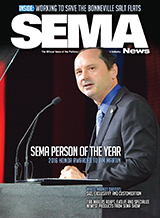
Tim Martin was named the 2016 SEMA 

Person of the Year

Tim Martin was named 2016 SEMA Person of the Year

Tim Martin is running for Chairman of the SEMA Board of Directors in the 2017 election. Tim is a Vice President at K&N, and has been a member of the K&N team for nearly 20 years. His goal is to serve SEMA members in shaping programs to benefit the industry. SEMA has tremendous resources that helps companies prepare for changes and threats in the future. SEMA’s mission is to help its members succeed, and the future requires experienced leadership.

Follow Tim's campaign at Facebook.com/TimForSEMA

Tim has served on the SEMA Board of Directors for seven years, and as a volunteer in SEMA programs for many more. He was recently honored to receive the 2016 SEMA Person of the Year award for contributions as a SEMA volunteer. He has been an effective member of the Board, and understands SEMA programs well. Understanding the potential of SEMA to help our industry and the automotive lifestyle, Tim is well suited to serve as the Board Chairman.

Tim has been involved in many SEMA and professional programs, including the following:

  • 2016 SEMA Person of the Year award recipient
  • SEMA Board of Directors (2 terms)
  • SEMA Data Co-op Board of Directors
  • SEMA Youth Engagement Task Force
  • SEMA CBLC Review Task Force
  • SEMA Board Nominating Committee
  • SEMA Garage Task Force and participant in initial SEMA Garage program planning meetings
  • SEMA Business Technology Committee (BTC)
  • SEMA Business Development Working Group
  • SEMA NextGen Working GroupSEMA Health Care Task Force
  • SEMA Fuel Economy Task Force
  • Speaker and participant at SEMA Town Hall Events
  • Speaker at several SEMA Show educational seminars
  • Speaker at SEMA Manufacturers’ Rep Network (MRN) annual meeting
  • Speaker at Performance Warehouse Association (PWA) conference
  • Speaker at AAIA/SEMA Aftermarket eForum conference
  • Speaker at AAIA National Catalog Managers Association (NCMA) conference
  • Member of SEMA PAC Presidents Club, SEMA PAC Redline Club
  • Participant at SEMA Washington Legislative Events
  • Presenter at SEMA Board Orientation
  • Member of SEMA delegation to the SCORE Baja 1000
  • Participant in many other SEMA projects and events
  • Multiple meetings with members of U.S. Congress, staff, and local government leaders
  • Member, Dean’s Advisory Council, University of California Riverside School of Business
  • Member, Business Council, Greater Riverside Chamber of Commerce
Tim Martin is running for Chairman of the SEMA Board of Directors in 2017

Tim Martin is running for Chairman of the SEMA Board of Directors in 2017

Tim is a Vice President at K&N Engineering, and joined the company as a consultant in 1997. He has served many roles at K&N over the past 20 years. His responsibilities have included leadership in sales, customer service, marketing, manufacturing, purchasing, distribution, and information technology. He previously worked as a consultant, and as an engineer for the U.S. Navy for 10 years. He has experience in project management, financial reporting processes, product development, product testing, product information standards, software development, strategy, organizational development, and legal issues.

Tim’s education includes 2 bachelor’s degrees in engineering from the University of Missouri, and a master’s degree in management from the University of Southern California. He enjoys off-roading and other motorsports, and is married with 4 children.

Tim's goals are to help improve SEMA programs that grow and protect our industry. He plans to focus on the following areas:

  • Support the SEMA Show and PRI Show as industry-leading events
  • Grow legislative programs to protect customization and recreation
  • Develop and support youth-engagement programs to grow awareness
  • Create new career development and networking opportunities
  • Improve member services and promote healthy industry collaboration

The election ballots will be emailed to the primary contact for each SEMA member company in May.

For more information about SEMA go to www.SEMA.org

Follow Tim's campaign at Facebook.com/TimForSEMA

clear

K&N PRODUCT SEARCH     WHERE TO BUY K&N

Classic 1965 Comet A/FX Drag Racer Reinterpreted As A Modern Day Street Machine

The construction of Mike Lookners 1965 Comet Cyclone took over two years

Mike Lookner pays homage to the A/FX drag cars of the '60s with an updated street version

In motorsports, there are certain periods of time when huge leaps in technology and performance occur over just a few years. Take the Indianapolis 500 in the early 1960s. Within 5 years of Jack Brabham’s appearance with his Formula 1 style car in 1961, the rear-engine cars had locked-out the Roadsters from Victory Circle at the Brickyard.

At right about the same time, just about the same thing was going on in drag racing. Despite a joint agreement signed by the Big Three automakers in 1957 not to actively support racing, they did so clandestinely.

By the early 1960s, special lightweight, high performance models were “available” to the public in order for the carmakers to win in NHRA’s popular Super Stock category. Having had enough of the automakers’ shenanigans, in 1962 the NHRA created the Factory Experimental class, the most well-known being the top-level A/FX.

The wheelbase was shifted on A/FX cars to provide more transfer more weight to rear tires

One of the original A/FX Funny Cars: Dyno Don's altered wheelbase 1965 Comet Cyclone

It started simply enough with big motors stuffed in small cars with lots of lightweight parts, moved on quickly to the outrageous altered wheelbase cars, the first to be dubbed “Funny Cars”, and then to the 1966 Mercury Comet that featured a fabricated tube frame chassis with flip-top fiberglass body that became the basis of Funny Cars to this day.

There are many who look back at the years between the forming of the Factory Experimental class and the appearance of the first flip-top Funny Car was a golden age of door-slammer drag racing. Count Mike Lookner among them.

Thankfully for Mike, his brother Andrew runs Extreme Machine Unlimited, in their home state of Massachusetts. Together the two conspired to build a 1965 Comet Cyclone influenced by the AF/X cars of the early 1960s, but not be limited by 1960s technology. In essence, they reinterpreted the concept of the AF/X to a streetable car of the 21st century.

Mike's Comet was fitted with mini-tubs to accomodate 12" wide rear wheels and tires

Mike's Comet was fitted with mini-tubs to accomodate 12" wide rear wheels and tires

The result is a stunning car that’s as at home on the street or strip as it is in a car show. An indication of the level of seriousness with which the Lookner brothers took this project, the body was sent to International Show Car Association (ISCA) category winner George Kouthouridis to repair and prepare the metalwork and massage all the panel gaps.

Peter Newell of Competition Specialties sprayed the body in Candy Brandywine that looks like it’s three feet deep, with the bumpers painted in metallic Argent giving them the appearance of the unpolished aluminum bumpers on early A/FX cars.

The four point roll bar provides easy access in and out of the car, yet still protect on the strip

The interior was kept stock looking except for a few safety features plus a full set of gauges

The interior was kept relatively stock-looking, with factory vinyl replacement seats along with door panels and headliner. The only real tip-offs that this car isn’t a stock restoration from the inside are the Autometer gauges, Grant steering wheel, four-point roll bar, and Simpson four-point driver’s harness.

Underneath subframe connectors were added by DMC Racing to strengthen the chassis in preparation of the powerful big block motor. A Ford 9-inch rear axle with 4:10 gears was fitted to accommodate the larger 15x12-inch rear wheels that will reside in the mini-tubs. The multi-leaf rear spring was replaced by a mono-leaf, which now acts more as a locating device.

The rear suspension loads are now carried by QA1 adjustable coilovers. Up front, a Total Control Products dual-adjustable coilover conversion was installed. Brakes are a conservative 11” front disc and rear drum set-up. The Radir wheels selected nicely reflect the five spokes on “Dyno Don” Nicholson’s 1965 AF/X Comet Cyclone.

The FE block was also used in the A/FX Funny Car drag racers of the 1960s

The Ford FE big block was built by Mike's brother Andrew and produces 650 horsepower

But, of course, it’s under the hood where things get really exciting. Brother Andy built the motor from an original Ford 428 FE (same block as used for the 427 Cammer motors in A/FX) from a 1968 donor. He punched it out to 469 CID and it now produces 650 horsepower, delivered through a three-speed C4 automatic transmission built by Monster Transmissions.

The bottom end features a Scat crank and Eagle rods all forged from ultra-high strength 4340 alloy steel, 11.25:1 JE aluminum pistons, and an aggressive solid lifter camshaft from Cam Motion.

Intake air is drawn through the factory hood scoops and into a pair of K&N E-3280 filters into matching Edelbrock AVS 650 CFM carbs, Edelbrock RPM aluminum intake, and into a set of Edelbrock RPM aluminum heads, topped with valve covers featuring K&N 62-1220 breathers.

The process took two-and-a-half years to complete, but even just from viewing the photographs, the results are both stunning and a fitting tribute to that insane era of drag racing.

clear

K&N PRODUCT SEARCH     WHERE TO BUY K&N

Dave Reed Doubles Down To Pursue Two Championships in Spears Southwest Tour

Dave Reed Racing enters two cars in the Southwest Tour series, both supported by K&N

Craig Raudman (2) and Austin Reed (14) side-by-side at Kern Raceway (Photo by Amanda Perryman)

You’d think that as a car owner when the driver you’ve planned on racing for you decided instead to go in a different direction, it would set back your program. But not for Dave Reed. Instead Reed has decided to go for a double championship – for drivers and car owners – in the 2017 Spears (SRL) Southwest Tour Series.

Reed, CEO of Advanced Memory, a company that manufactures high reliability computer memory for critical applications like the military, has operated Dave Reed Racing and entered cars in various race series around the West Coast since 1993, including NASCAR Craftsman Trucks, K&N NASCAR Pro Series West, Legends, Mini Outlaws, and even local Late Model.

Promising young driver Ricky Schlick, who had raced for Reed in 2016, has had the opportunity to move to another team to compete in a full-season of the SRL for 2017, so Reed was faced with a choice. Continue to run different drivers for a few events each or concentrate on a single driver and work toward not one, but two championships. He chose the more difficult but potentially more rewarding route.

Dave Reed is looking for both the Owners and Drivers champsionships in 2017

Craig Raudman will be the full-time driver of the #2 car (Photo by Roger Seymour Photography)

So Reed will now be chasing the two championships with veteran full-time driver Craig Raudman in the Number 2 car. In 2016, Raudman drove in five races for Reed, with one top 5 and two top 10 finishes to his credit.

There’s also a long-term relationship between Reed and Raudman that dates back to 1994, which is clearly to their benefit. Raudman is also well-known as an ace crew chief on short track cars, which can do nothing but improve the team’s ability to set-up the car quickly.

Raudman may be best known for his victory in the short-lived LA Street Race that was part of the NASCAR Featherlite Tour Series at the time, beating out both series regulars as well as some big name drivers attracted by the prestige of the event and large purse on offer. The event ran for just three years and Raudman nearly won the first two as well.

The team has great hopes that the new chassis design will vault them to a championship

The chassis that Craig Raudman drove to fourth, under construction (Photo by Craig Raudman)

The one fly in the ointment is that Raudman has a potential conflict at the May race at The Bullring in Las Vegas (more about that in a minute).

Reed is pulling out all the stops toward his double championship quest. He’s fielding two new Straight Rail chassis cars from Victory Circle, in Bakersfield. Not only does Reed’s team benefit from having their chassis builder intimately familiar with all the tracks in the series, but with Bakersfield so central geographically to the tracks, if there’s crash damage to the frame that needs to be repaired in the jig, it’s a fast turnaround. Reed is also having a third car built by Bond Suss Racing in Charlotte.

For filters, Reed has been a loyal partner with K&N for 15 years.

“We have been fortunate to be able to tour their facilities several times and it is truly is an amazing facility,“ Reed said. “ K&N has the best quality out there not to mention the people behind the products.”

Dave Reed Racing has been using K&N Filters consistently for over 15 years

The K&N logo proudly displayed on the rear of one of Dave Reed's cars (Photo by Dave Reed)

High praise from a man whose daytime job it is to run a company that manufactures memory modules for, among others, military and aerospace applications.

The Number 14 car will be driven by a rotating roster of drivers, including Reed’s son Austin, Eric Norris - stunt coordinator on the Hawaii 5-0 television series and son of martial arts legend Chuck - and one or two drivers yet to be named. Reed hinted at one being an East Coast hot shoe while another is a former Southwest Tour Champion. Most intriguing is the driver who might fill in for Raudman at The Bullring: a “household name” in racing, according to Reed.

At the first race of the season at Irwindale, Raudman ran in the Top 5 in all practices, finished an impressive fourth in a race won by Bobby Hodges, with 2016 champ Derek Thorn second. Raudman started seventh and steadily worked his way up to fourth over the course of the race. All in a brand-new race car fresh off the trailer. Most definitely a good omen for the start of a very ambitious season.

clear

K&N PRODUCT SEARCH     WHERE TO BUY K&N

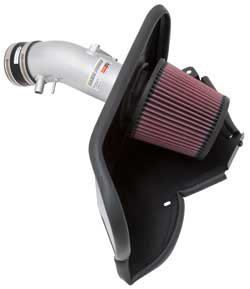
Der 2012 bis 2017 Toyota Camry 3,5 L gewinnt PS mit dem K&N Performance Luftansaugsystem.

K&N Lufteinlass für 2012 bis 2017 Toyota Camry 3,5 L
Der Toyota Camry ist in Produktion seit 1982 und ist auch heute noch eines der beliebtesten Fahrzeuge. Toyota kam heraus mit dem 2012 Modell (XV50) im September 2011, und ersetzte damit die XV40-Serie als die siebte Generation von Camry. Dieses Modell hat eine 2,5-Liter- und eine 3,5-Liter-Motor Option. Während der 2,5 Liter großartig für in der Stadt ist, hätten einige Fahrer vielleicht lieber etwas mehr Performance bei längeren Fahrten und so wählen sie den 3,4 L V6 Motor.

K&N hat ein Performance Luftansaugsystem mit hohem Luftdurchsatz für den V6 Motor designt. Das 69-8618TS ist ein benutzerdefiniert gestaltetes Luftansaugsystem und ermöglicht eine bessere Leistung des Fahrzeugs und bietet hervorragende Filtration für den Schutz Ihres Motors. Es wurde erstellt, um die Aufnahmeeinschränkung durch eine Glättung und Begradigung des Luftstroms drastisch zu verringern. Das erlaubt dem Motor des Fahrzeuges leichter zu atmen als das ab Fabrik Airbox System, was zu mehr Leistung und Drehmoment führt. Das 69-8618TS passt in 2012-2017 Toyota Camry Modelle mit einem 3,5-Liter-V6-Motor.
Ein K&N Lufteinlass installiert auf einem 2012 Toyota Camry 3,5 L.


Das kegelförmige Luftfilter (RU-4990), ist im Lieferumfang des Lufteinlasses, und ist waschbar und wiederverwendbar. Kein wegwerfbares Luftfilter, das man immer wieder ersetzen muss. Das Performance-Luftfilter RU-4990 kann für bis zu 100.000 Meilen benutzt werden, bevor Reinigung erforderlich ist, je nach Fahrbedingungen.

Dieses Luftansaugsystem verfügt auch über einen Hitzeschild, das hilft die Hitze vom Motor abzulenken. Es kommt auch mit einem Aluminiumrohr mit geringer Einschränkung und einer silbernen pulverbeschichteten Oberfläche speziell für den Toyota Camry. Die Installation kann mit ein paar allgemeinen Handwerkzeugen in weniger als 90 Minuten durchgeführt werden. Das K&N 69-8618TS enthält schrittweise Anleitungen mit detaillierten Fotos für eine einfache Installation.

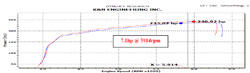
Dyno Prüfstand Ergebnisse für einen 2012 Toyota Camry 3,5 L mit Lufteinlass 69-8618TS installiert.

Obwohl der Camry nicht als Hochleistungsauto angesehen wird, können Sie trotzdem die zusätzliche Leistung, die ein K&N Performance Luftansaugsystem bietet, genießen zusammen mit dem Komfort, Sicherheit und Zuverlässigkeit des Camry. Der K&N 69-8618TS Lufteinlass wurde auf einem 2012 Toyota Camry mit einem 3,5-L-Motor getestet. Und man sah eine geschätzte Zunahme von 7 PS bei 5914 U/min und 6,5 Lbft Drehmoment bei 4.698 u/min.. Am allerbesten, das 69-8618TS wird mit der K&N Million Mile Limited WarrantyMillion Meilen eingeschränkten Garantie gesichert, so wird es der letzte Lufteinlass und Luft Luftfilter sein, das Ihr Toyota Camry jemals brauchen wird.

Die K&N Lufteinlass 69-8618TS passt an die folgenden Camrys:
2017 Toyota Camry 3.5L V6
2016 Toyota Camry 3.5L V6
2015 Toyota Camry 3.5L V6
2014 Toyota Camry 3.5L V6
2013 Toyota Camry 3.5L V6
2012 Toyota Camry 3.5L V6

Für eine Liste aller K&N Lufteinlässe für Toyota Camry, besuchen Sie die Toyota Camry Air IntakesToyota Camry Lufteinlass Seite auf knluftfilter.com. Nicht das Fahrzeug, das Sie gesucht haben? Schauen Sie sich die K&N Einlass Seite für Toyota Camry Modelle auf der Website von K&N an.

Find K&N products for your vehicle using the K&N Anwendungssuche then use the K&N Händlersuche to find a K&N dealer in your part of the world.