Neueste Nachrichten

Leadership in Energy and Environmental Design (LEED) Waste Performance Guide

Leadership in Energy and Environmental Design (LEED) Waste Performance Guide

Use K&N Global Filtration’s reusable industrial air filters to claim additional LEED points, up to 8 in the waste practices section, which is a prerequisite.

Measure the total weight of waste (in lbs., kg, or tons) that is generated and the total weight that is diverted from landfills and incineration facilities for one full year or from a waste analysis. Exclude any facility renovation waste.

To document the weight of disposable vs reuseable filters, before installing K&N filters, weigh a representative sample of legacy disposable filters from each air handling unit (AHU) operated in the building, when they have reached the end of their service life, as they are removed before they are sent to landfill. Multiply the weights of individual used filters by the number of filters installed in each AHU to derive the total weight of filters being sent to landfill for the building. This is the additional diversion weight for the calculation below.

Input generated and diverted waste totals and calculate a waste performance score for the project. LEED points for this prerequisite are awarded for waste performance scores above 40, as follows:

LEED Points for Waste Performance

Waste Performance ScoreLEED Points
40 3
444
575
696
827
948

Waste performance score calculation

To calculate waste performance score, the following data is required:

  • Total waste generated (lbs., kg, or tons)
  • Total waste diverted (lbs., kg, or tons) – ADD the calculated weight of used disposable filters to the value derived before adopting K&N reusable filters.
  • Weighted occupancy

The waste generated is converted into an average daily waste generated per occupant, using the following equation:

Average daily waste generated = (waste generated / # days associated with waste total) / occupancy

The waste diverted is converted into a daily waste undiverted per occupant, using the following equation:

Daily waste undiverted per occupant = (waste diverted / # days associated with waste total) / occupancy

The daily undiverted waste is calculated using the following equation: 

Daily undiverted waste per occupant = daily waste generated per occupant– daily waste diverted per occupant

The project’s calculated average daily waste generated per occupant AND average daily waste undiverted per occupant are input into the waste scoring function to calculate the waste performance score. 

Pro Tip

Since these equations uniquely normalize for occupancy, removing HVAC filters from the waste stream will have an outsize impact on lightly occupied buildings – like data centers. 

If you’d like to learn more about LEED credits, visit www.usgbc.org/credits.

Total Resource Use and Efficiency (TRUE) Sustainability Credits Guide

Total Resource Use and Efficiency (TRUE) Sustainability Credits Guide

TRUE is a zero waste certification program dedicated to measuring, improving and recognizing zero waste performance by encouraging the adoption of sustainable materials management and reduction practices.

K&N reusable filters may contribute to the pursuit of certain credits within the TRUE rating system as part of a larger strategy. Some of these opportunities to contribute to your TRUE certification are outlined below.

Redesign Credit 4: Complete Review of the Supply Chain

Amend your supply chain to reduce waste from vendors by using reusable air filters. Show documentation to prove policy change.

Reduce Credit 1: Materials Reduced by Commodity

Identify at least one material (in this case your HVAC filters) which are being reduced. Collect documentation of the material volumes from a determined baseline period that is representative of ongoing operations.

Reuse Credit 1: Develop Systems that Emphasize Reuse

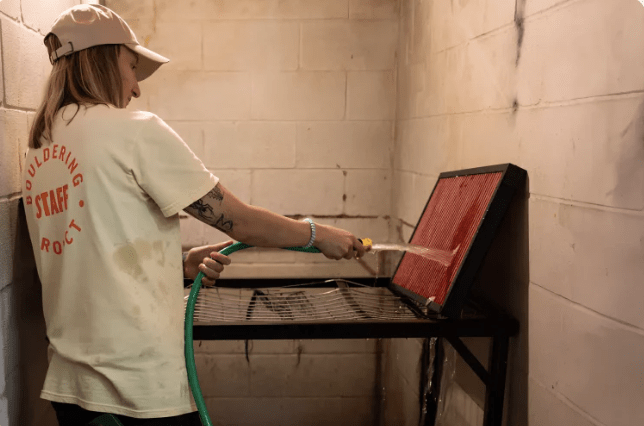
Identify single-use materials (HVAC filters) and establish a program to help reduce or eliminate at least one material/item type, by replacing conventional filters with K&N reuseable filters.

Zero Waste Reporting Credit 1: Document Diversion by Commodity or Waste

Develop and implement tracking procedures for HVAC filters. Strive to obtain actual weights for HVAC filters.

Zero Waste Reporting Credit 2: Track Financial Data for Diversion and Waste Disposal

Develop a diversion and associated cost matrix (landfill disposal cost, avoided landfill cost, recycling hauling costs, any other fees/cost) on a building size basis. Identify your waste hauling/landfill fees and, depending on your local jurisdiction and waste management utility/vendor, you may be able to show avoided costs for your HVAC filter waste reduction.

Diversion Credits

Develop a case history to demonstrate 12-month diversion benefits:

Divide weight of materials diverted by the total weight of materials generated and compare with credits available which range from 90.1% to 100%.

To create additional credit for the use of K&N reusable filters, before installing K&N filters, weigh a representative sample of legacy disposable filters from each air handling unit (AHU) operated in the building, when they have reached the end of their service life, as they are removed before they are sent to landfill. Multiply the weights of individual used filters by the number of filters installed in each AHU to derive the total weight of filters being sent to landfill for the building. This is the additional diversion weight in the reduction category for the calculation above.

Zero Waste Purchasing Credit 2: Include Preference for Durable Goods in EPP Policy or Guideline

As part of the project’s written EPP policy or guideline requiring first preference be given in purchasing to durable goods, Add K&N reuseable filters to your list of durable goods.

Purchasing Credit 4: Identify EPP Items in purchasing catalogs

As part of your environmentally preferred items catalog, include K&N reuseable filters, and add reusable air filters to your central purchasing system.

Pro Tip

TRUE certification can support the pursuit of Materials and Resources credits in LEED for Operations and Maintenance and LEED Zero Waste certification.

If you’re interested in learning more about TRUE, visit true.gbci.org.

Building Research Establishment Environmental Assessment Method (BREEAM In-Use Version 6) Waste Credits Guide

Building Research Establishment Environmental Assessment Method (BREEAM In-Use Version 6) Waste Credits Guide

Up to 6 management performance credits are available within BREEAM for waste management, depending how the data is collected and communicated, with a requirement to target-set and document either tonnage or cubic feet of diverted waste.

To calculate the additional tonnage of diverted waste by using K&N reusable filters, before installing K&N filters, weigh a representative sample of legacy disposable filters from each air handling unit (AHU) operated in the building, when they have reached the end of their service life, as they are removed before they are sent to landfill. Multiply the weights of individual used filters by the number of filters installed in each AHU to derive the total weight of filters being sent to landfill for the building. This is the additional diversion weight for your table below.

Alternatively calculate the additional volume of diverted waste by using K&N reusable filters, before installing K&N filters, measure a representative sample of legacy disposable filters from each air handling unit (AHU) operated in the building, when they have reached the end of their service life, as they are removed before they are sent to landfill. Be sure to measure the filters in the state they are disposed of in case they are usually crushed before disposal. Multiply the volumes of individual used filters by the number of filters installed in each AHU to derive the total volume of filters being sent to landfill for the building. This is the additional diversion volume for your table below.

Use the highlighted row below.

Landfilltons/ft3
Incinerationtons/ft3
Diverted – waste to energytons/ft3
Diverted – recycling – not closed-loop/unknowntons/ft3
Diverted – recycling – closed-looptons/ft3
Diverted – reuse – not at the assettons/ft3
Diverted – reuse – at the asset (or stored for reuse on the asset)tons/ft3
Diverted – recycled – at the assettons/ft3
Diverted – other tons/ft3

To learn more about BREEAM for waste management credits, click here.

UL Standard 2799 Waste Diversion Guide

UL Standard 2799 Waste Diversion Guide

The formula used to calculate the zero waste to landfill diversion rate is as follows:

When installing K&N reusable filters, the weight of diverted filter waste counts towards the mreduced, Mass reduced (onsite) weight in the above table.

To calculate the additional mass of diverted waste by using K&N reusable filters for this table, before installing K&N filters, weigh a representative sample of legacy disposable filters from each air handling unit (AHU) operated in the building, when they have reached the end of their service life, as they are removed before they are sent to landfill. Multiply the weights of individual used filters by the number of filters installed in each AHU to derive the total mass of filters being sent to landfill for the building. This is the additional diversion mass, mreduced, to contribute to your table.

Pro Tip

The UL Standard requires each facility of an organization to prove at least 90% diversion through methods other than waste to energy for that facility to achieve Zero Waste to Landfill (ZWTL) designations (Silver, Gold, Platinum). The highest designation, platinum, is validated by UL Solutions when a facility can prove that it consistently achieves a landfill waste diversion rate of 100%. This may not be achievable if your building uses disposable HVAC filters. Your building may now be able to meet this requirement by switching to K&N reusable filters, especially if you show intent to reuse them with, say a washing procedure or cleaning contract.

To learn more about UL Solutions Waste Diversion Credits, click here.

Green Globes for Existing Buildings Points Guide

Green Globes for Existing Buildings Points Guide

The Materials section 5.2 of GreenGlobes, Recycling and Waste, earns a maximum of 55 points out of a program total of 1,000 points when calculating a green building initiative. Green Globes certification requires a minimum overall score of 35% of the total applicable points, and certified projects are assigned a rating of One to Four Green Globes. A waste diversion policy itself earns six points and must include types of consumables/disposables waste being diverted from landfill, contractor requirements, and waste reduction targets. Waste measurements should be expressed both in absolute terms (e.g. the total amounts of trash and recycling) and percentage rate reduction over a specific timeframe.

Waste diversion target credits are awarded as follows:

Diversion Target PercentagePoints
85% – 100% 5
75% – 84%4
50% – 74% 3
25% – 49% 2
Less than 25% or unknown0

Depending on other waste streams for the building, the use of reusable filters will raise the diversion rates to earn additional points.

To calculate the additional weight of diverted waste by using K&N reusable filters:

  • Before installing K&N filters, weigh a representative sample of legacy disposable filters from each air handling unit (AHU) operated in the building, when they have reached the end of their service life, as they are removed before they are sent to landfill.
  • Multiply the weights of individual used filters by the number of filters installed in each AHU to derive the total weight of filters being sent to landfill for the building.
  • This can be applied to the baseline year to show the percentage rate reduction for the following year and will go towards your waste diversion performance for your Green Globes Assessor to review.

To learn more about the Green Globes for Existing Buildings program, visit thegbi.org/greenglobes.

Phil der Filter
Chatten Sie jetzt